SECURITY CAMERAS · SCHOOLS
Security cameras for schools in Guatemala
E3 Solutions designs, installs, and maintains security camera systems for schools in Guatemala, with Bolide technology and end-to-end service — from the on-site technical assessment to documented system handover. A school is not a retail store: there are minors, there are sensitive areas, there are parents who trust the institution, and there is staff who also deserve privacy. Every project includes installation by certified technicians, a 3-year warranty on the Bolide equipment, and 24/7 support — all backed locally from Guatemala City.
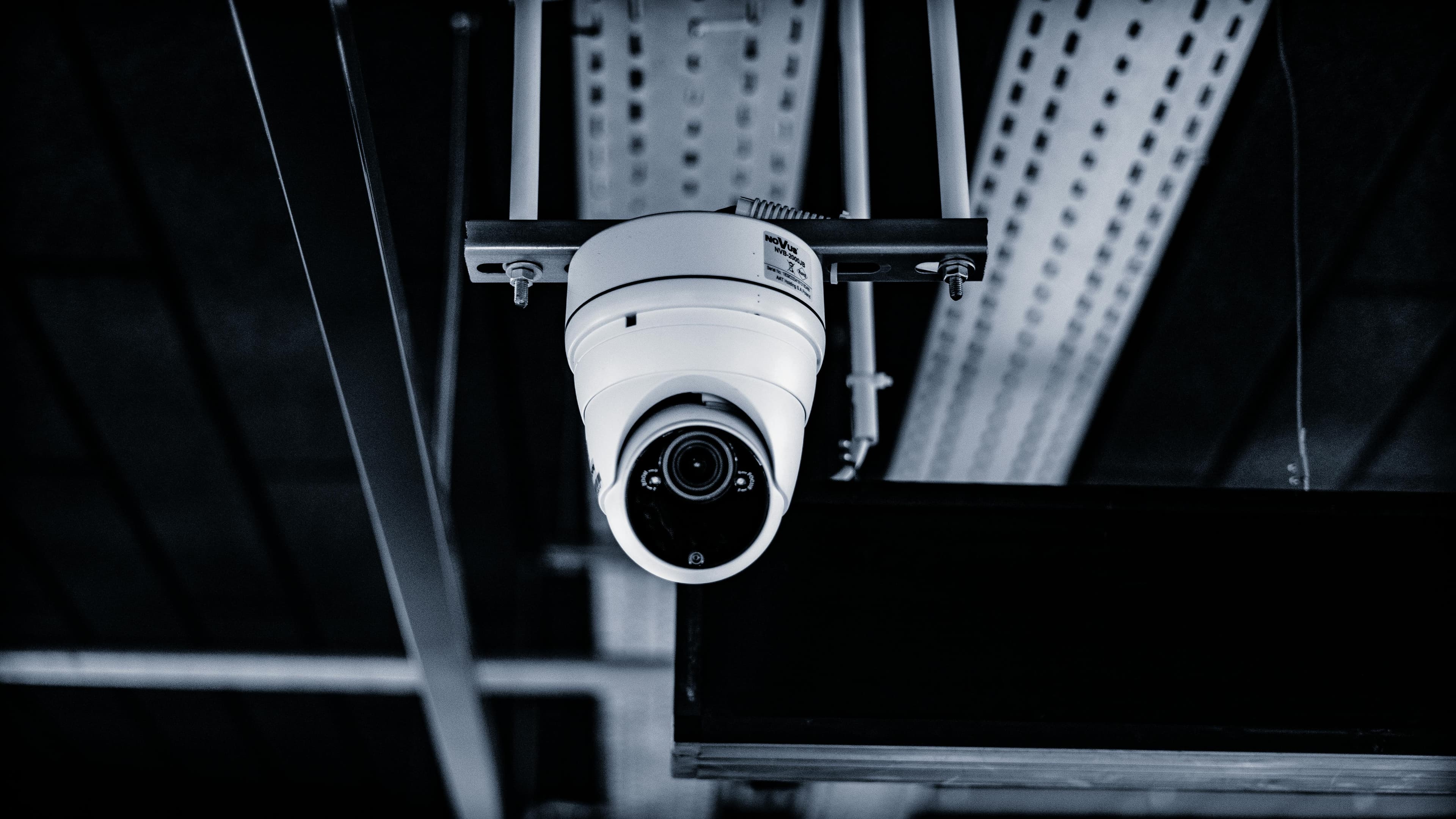
A camera system for a store or a warehouse solves a relatively clear problem: loss prevention and theft deterrence. A school faces a different and simultaneous set of problems that can't be solved with an "average kit" of cameras. The needs are more complex, sensitive zones are more numerous, and the responsibility toward the people inside the campus — students, teaching staff, parents — is of a different nature.
Why a school needs a specific solution
Access control
Only parents, students, and authorized staff should enter — and that flow must be loggable and reviewable.
Perimeter and common-area coverage
Reception, parking lot, courts, courtyards, cafeteria, and main hallways are the highest-traffic points and therefore the first that need coverage.
Zones that must be left out of the system
Bathrooms, locker rooms, and staff break areas are not candidates for any camera, without exception. Clearly defining the system's boundaries is part of responsible design.
Coordination with school staff
Cameras complement guards, gatekeepers, and administrative staff; they do not replace them. The system must be operable by the school's own staff.
That's why E3 designs each project on a site visit, not from a catalog. Before quoting, a technician walks the campus and prepares a coverage plan tailored to the actual site.
For a typical school in Guatemala, a complete school video surveillance system includes four main components. Check the available models in the Bolide camera catalog or in the base-technology guide.
System components
IP cameras for perimeter and outdoors
Vehicle entries, façades, fences, and perimeters require cameras with long-range infrared vision. The bullet form factor is the most common for its reach and concentrated angle. For wide areas like open parking lots or sports courts, PTZ cameras cover multiple zones from a single point. Panoramic and fisheye cameras eliminate blind spots on large courtyards with a single unit.
Cameras at access points and control zones
Gatehouses, reception areas, and main entrances are the system's most critical points. Dome or eyeball cameras with varifocal lens are recommended — they capture faces clearly without intimidating visual presence. For vehicle entrances, license plate recognition analytics (LPR, iPac AI) logs entries and exits without manual intervention.
Cameras in interior common areas
Main hallways, stairwells, reception, cafeteria, and library are the highest-traffic interior spaces. Discreet mini-domes are recommended. Two-way audio, available on specific models, is activated only at staffed control points — gatehouses and receptions — and not by default in classrooms or in areas of free student use.
NVR, storage, and management software
The heart of the system is the centralized Bolide NVR: it records locally and autonomously, and keeps running if the internet goes down. Storage is sized based on the number of cameras and the retention period (typically 14 to 30 days). The Bolide VMS controls who can view live video, who can export recordings, and logs every access. Authorized staff connect remotely from a phone.
Technology and compliance — Bolide and iPac AI for schools
NDAA compliance — relevant for international schools
Bolide Technology Group is a US manufacturer based in San Dimas, California. Its iPac AI lines carry NDAA compliance (Section 889), the regulation that restricts video surveillance equipment from certain manufacturers in US federal facilities. Many private, bilingual, and international schools in Guatemala maintain ties with US-based organizations, foundations, or boards: parent organizations, sponsors, accreditation programs, exchange agreements. For these institutions, choosing NDAA-compliant equipment eliminates procurement conflicts with their US counterparts.
iPac AI analytics — used prudently in a school environment
Bolide cameras with iPac AI run analytics on the device, with no external cloud. E3 activates by default: perimeter intrusion outside school hours, line crossing at restricted access points, crossing counts at main entrances, and video tampering detection. E3 does NOT activate by default: face recognition on minors or general face recognition in student areas. This is a service policy, not a technical limitation.
H.265 compression and the school's network usage
All Bolide IP cameras use H.265 compression: up to twice the storage efficiency and half the bandwidth compared to H.264. Local recording on the NVR ensures the system doesn't compete with the school's internet — video is stored internally and internet is used only for remote access and notifications.
Best practices and regulatory compliance
Guatemala does not currently have a comprehensive personal-data protection law equivalent to the European GDPR. There are pending initiatives in Congress, but none are in force. In that context, best practices at a school are not solely a legal requirement: they are an institutional responsibility that protects the school from parent complaints, civil claims, and reputational harm.
E3 implements the technical side of the system. The administrative side is formalized by the school with its legal counsel. The general recommendations the school should document are:
- Internal policy describing the coverage zones of the camera system.
- Visible "Video-monitored area" notices at all covered access points.
- Notification to parents and staff (ideally in the enrollment contract and the employment contract).
- NVR access policy: who can view live video, who can export evidence, with an access log.
- Defined recording retention period (14 to 30 days is the typical range).
This section does not replace legal counsel. The school should consult with its advisor to formalize the internal policy.
What we DO
- Cover access points, perimeter, parking lots, and interior common areas.
- Record locally on the school's NVR (recordings stay on its premises).
- Activate analytics for perimeter intrusion, line crossing, and counts at access points.
- Train school staff on NVR use, evidence export, and access management.
- Suggest a recording retention period (14–30 days).
- Recommend visible "Video-monitored area" notices at all access points.
- Implement two-way audio at gatehouses and staffed access points.
What we DO NOT do
- Install cameras in bathrooms, locker rooms, or staff break areas.
- Upload recordings to the cloud without the school's explicit authorization.
- Activate face recognition on minors by default.
- Enable remote video access without a documented protocol of who can see what.
- Keep recordings indefinitely without a documented policy.
- Install hidden cameras.
- Activate audio recording in classrooms or in areas of free student use by default.
E3 installation — the service behind the equipment
Technical visit and project design
Before quoting, an E3 technician visits the school to walk the campus, identify coverage points, map zones to include and exclude, and size the cabling, NVR, and storage. The result is a proposal with a coverage plan, list of models, camera count, and specifications — with no purchase commitment.
Turnkey installation by certified technicians
Installation covers the entire project: structured cabling (UTP or coaxial depending on the school's infrastructure), physical mounting of cameras, NVR and PoE switches, configuration of the Bolide VMS software, remote access, activation of the defined analytics, testing with school staff, and documented handover.
3-year warranty, training, and 24/7 support
Bolide systems installed by E3 come with a 3-year warranty on the equipment. At handover, we train authorized school staff on daily NVR use, evidence export, and access management. E3 provides 24/7 support for emergencies outside business hours — especially relevant for schools with night or weekend events. Annual preventive maintenance plans are available.
Frequently asked questions about security cameras for schools
Let's design a camera system tailored to your school
Talk to an E3 Solutions advisor. We make a technical visit to the campus, assess the areas to cover, and deliver a clear proposal — backed by Bolide, a 3-year warranty, and professional installation.