Emotron · Soft starter line
Emotron TSA Soft Starters in Guatemala
An unplanned stop costs production downtime, mechanical damage, and electricity bills inflated by inrush current spikes. The Emotron TSA — a softstarter with three-phase torque control — reduces inrush current by up to ~30%, protects the machine's mechanics, and stops the motor intelligently according to the application. E3 Solutions is the official Emotron distributor for Central America, with technical advice and support in Guatemala.
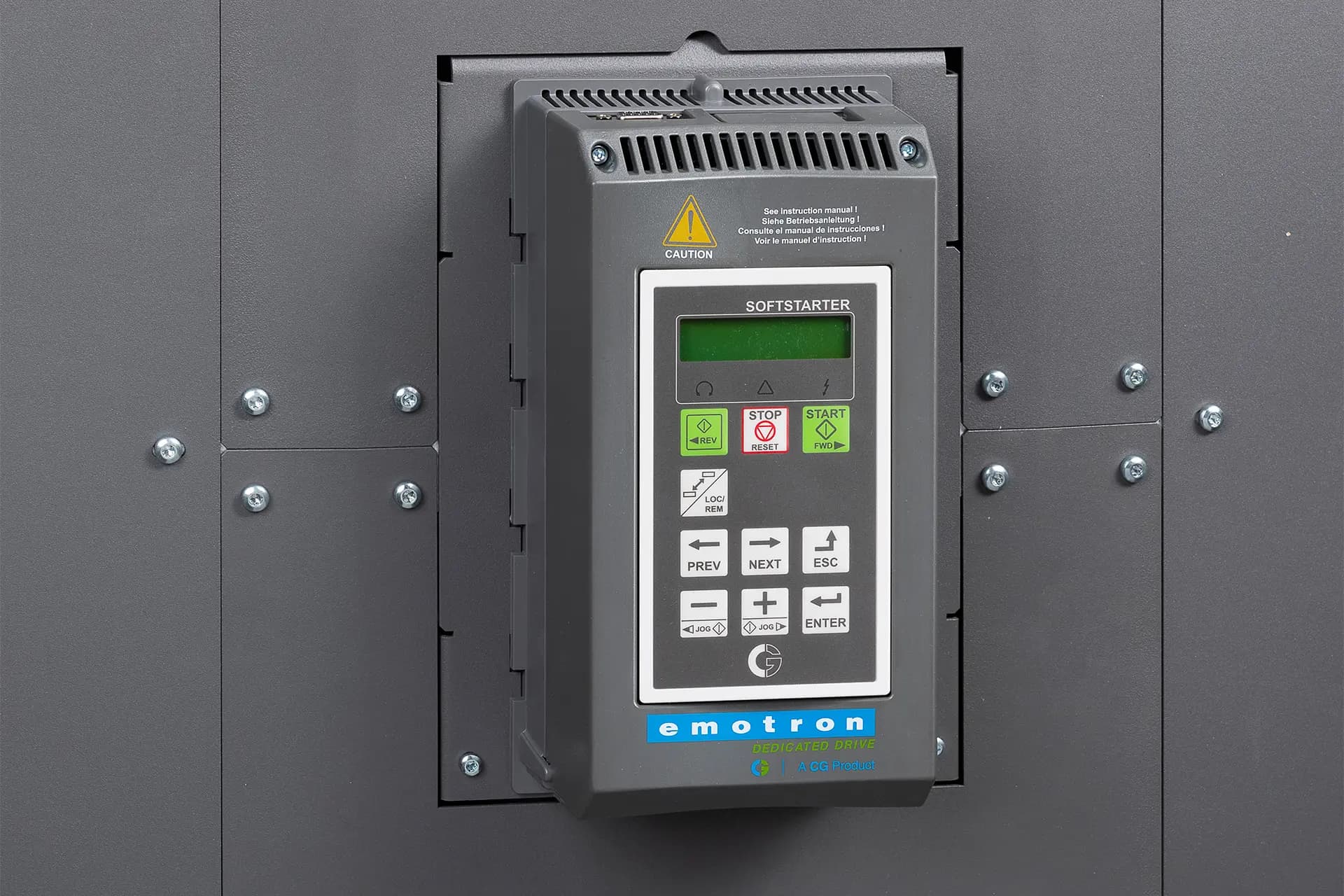
What is a soft starter?
A soft starter is an electronic device that limits the voltage applied to the motor during start-up, controlling inrush current and initial torque to avoid the spikes that characterize direct-on-line (DOL) starting. When a three-phase induction motor starts at full voltage, the inrush current can reach 6 to 7 times the rated current, which causes voltage drops on the network, protection trips, and severe mechanical stress on belts, couplings, and bearings. The soft starter eliminates that spike by accelerating the motor gradually. Unlike a star-delta starter, which only switches at a fixed point, the soft starter controls the voltage — and, in the case of the TSA, the actual torque — throughout the entire start-up, achieving a constant and controlled acceleration.
Not all soft starters are alike. While most only control starting voltage, the Emotron TSA works with the motor shaft's actual torque — a fundamental difference in processes where load varies. Three features set it apart in its class:
Why the Emotron TSA?
Continuous three-phase torque control
The TSA continuously calculates actual shaft torque throughout the start. The result is constant acceleration even under variable load — without the speed jumps caused by conventional voltage-controlled starters. Ideal for loads with high inertia or load variation between starts.
Up to ~30% lower inrush current
Reducing inrush current not only protects the motor: it allows you to size smaller fuses and cables, reducing electrical installation cost from day one. In installations with many motors starting simultaneously, the reduction in peak demand can directly impact the contracted tariff.
Integrated load monitor — no external sensors
The TSA includes a load monitor that detects jams, blockages, and dry running in pumps, all without additional pipeline instrumentation or external wiring. The motor's own current is the sensor. When the load drops below the configured threshold — a pump running without water, for example — the TSA acts before damage occurs.
Emotron TSA technical specifications
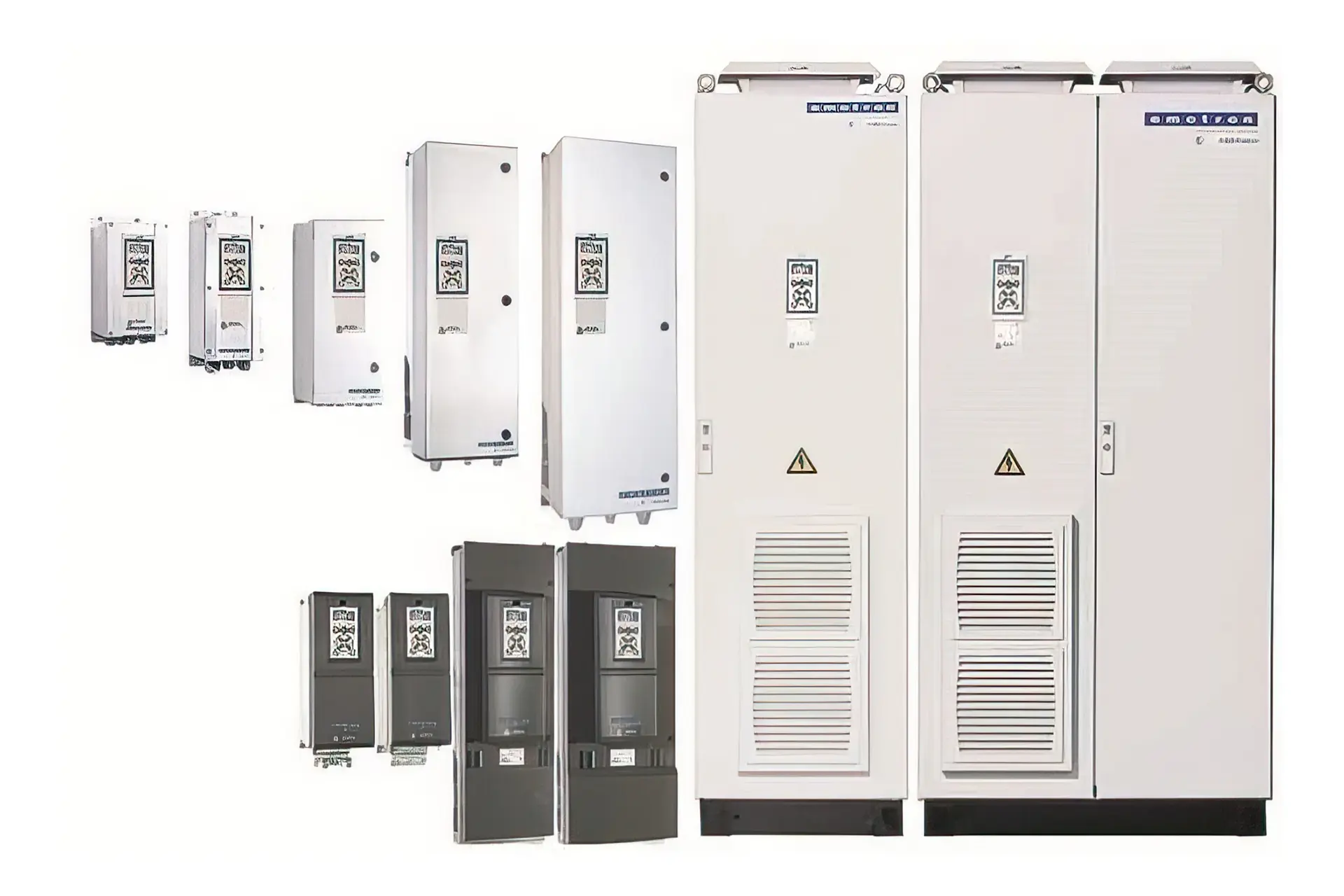
The Emotron TSA covers from 5.5 to 1000 kW across six frame sizes (1 through 6). Frames 1–4 cover the majority of installations up to ~250 kW; frames 5 and 6 correspond to high power (470–960 A).
- Rated power
- 5.5 – 1000 kW
- Supply voltage
- 200–525 V or 200–690 V, three-phase
- Control voltage
- 100–240 V, single-phase
- Rated current
- 16 – 960 A
- Degree of protection
- IP20, NEMA Type Open
- Frame sizes
- 1 – 6
- Thermal protection
- Standard PTC input; up to 6 PT100 sensors
- Communication
- Profibus DP, DeviceNet, Modbus/TCP, EtherCAT, Profinet (1 or 2 ports), RS485/Modbus RTU, USB
- Approvals
- CE (EMC, Low Voltage, RoHS), UL/cULus, DNV (marine), EAC
Recent Emotron catalogs list up to ~1800 kW in high-power configurations — confirm the exact power of your motor with an E3 Solutions advisor.
Standard features
Standard features
- Internal bypass and input thermistor as standard — no additional modules required
- Intelligent stops: linear/soft for pumps (eliminates water hammer), fast/braked for mills and saws
- Jog / low speed in both directions, no additional hardware
- Real-time clock with scheduled starts and stops
- Built-in programming blocks: logic, comparators, counters, timers
- Multilingual display; standard RS232
- Among the most compact soft starters in its class
Applications of the Emotron TSA soft starter
The Emotron TSA is approved and designed for the most common applications in Central American industry. Main use cases:
Main use cases
- Centrifugal and submersible pumps
- Fans and blowers
- Screw and reciprocating compressors
- Crushers and mills
- Conveyors and belt conveyors
- Mixers
- Saws (sawmills)
- Centrifuges
- Elevators and winches
Soft starter or variable frequency drive?
The choice between a soft starter and a variable frequency drive (VFD) depends on what the process needs from the motor during normal operation — not just at start. The Emotron TSA soft starter is the right solution when the motor must run continuously at rated speed and you only need to control starting and stopping: lower acquisition cost, simpler installation, and a more compact footprint. The variable frequency drive — Emotron FDU and VFX lines — is necessary when the application requires varying the motor's speed during operation: regulating a pump's flow, adjusting the speed of a conveyor belt, or controlling torque on a crane. The greater upfront investment of a VFD is justified in processes with variable demand, where energy savings from the affinity laws can be significant.
Need to vary motor speed continuously? Take a look at the Emotron FDU and VFX variable frequency drives →
Why buy through E3 Solutions
As the official Emotron distributor for Central America, E3 Solutions delivers more than equipment: it delivers the right implementation. Selecting the wrong frame size, misconfiguring the start ramp, or ignoring thermal protection can wipe out the benefits of the soft starter within a few weeks of operation. The E3 technical team knows the TSA line from selection through commissioning.
- Pre-sales technical advice: model selection by motor power, line voltage, and specific application
- On-site commissioning and start-up: parameter configuration, start-up tests, and verification of protections
- After-sales support and maintenance: technical attention after the installation
- Training for operating personnel: basic training for the plant team
Frequently asked questions about Emotron TSA soft starters
Get a quote for your Emotron TSA soft starter
Send us the motor power, your line voltage, and the application. We'll reply with the recommended configuration and a reference price — at no cost and with no commitment.