RESOURCES · EMOTRON
Variable frequency drive vs soft starter: which to choose?
The soft starter controls only motor start and stop. The variable frequency drive (VFD) controls speed continuously throughout operation.
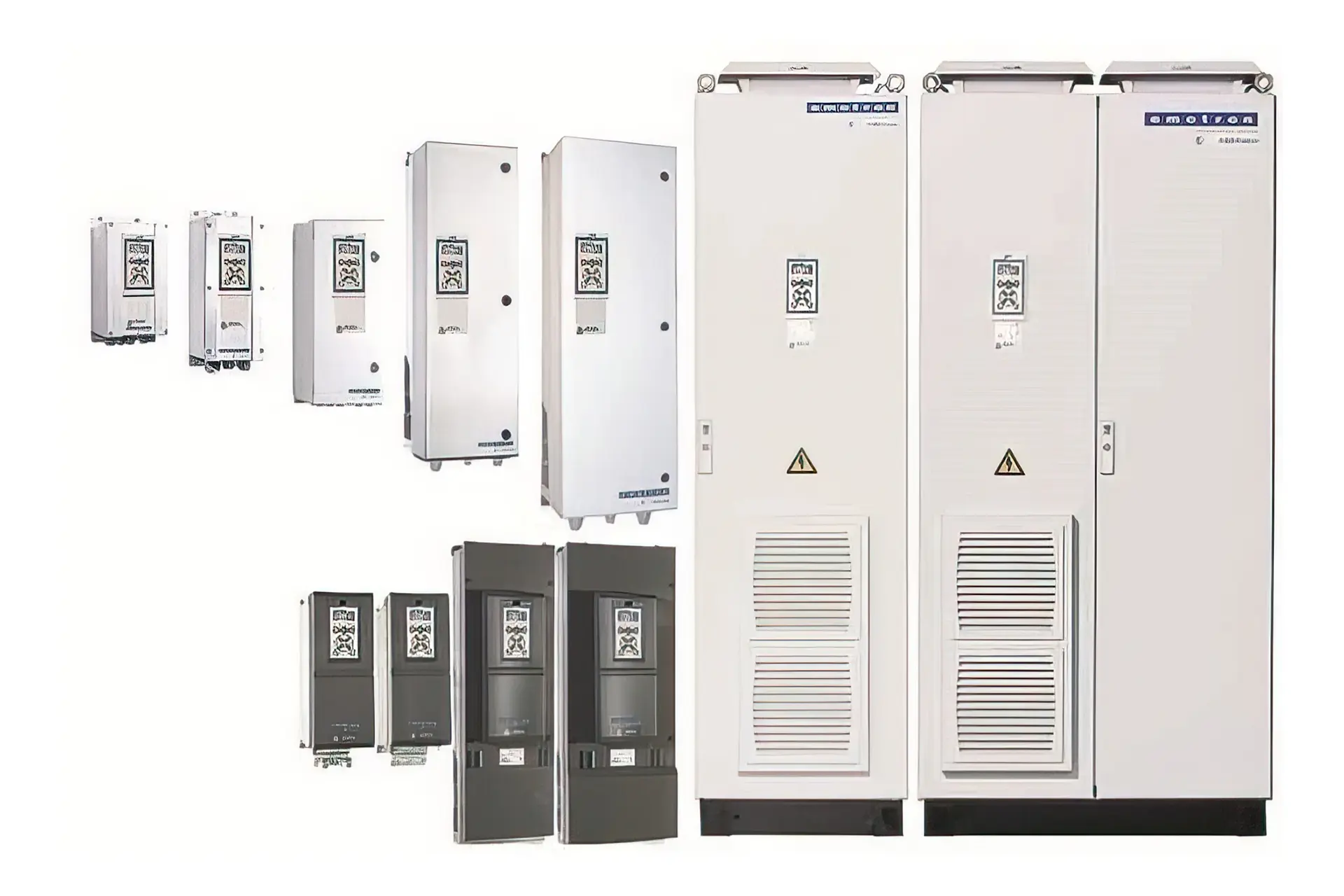
The soft starter controls only the motor's start and stop. The variable frequency drive (VFD) controls speed continuously throughout operation. If your process always runs at nominal speed, the soft starter is the right choice. If you need to continuously vary speed, pressure, or flow, you need a VFD.
This distinction looks simple, but choosing the wrong equipment has real consequences: higher energy consumption, missed savings opportunities, or an investment that exceeds what the process needs. Whether you are a plant engineer, maintenance manager, electrical contractor, or the owner of a farm or processing plant, this guide helps you make the right decision from the start.
This guide is prepared by the technical team at E3 Solutions, the official Emotron distributor in Central America. If you already know what you need, you can go straight to the product pages: **See Emotron TSA soft starters → or See Emotron variable frequency drives →**.
What is a soft starter?
A soft starter is an electronic device that controls the voltage applied to the motor during start and stop, using thyristors (SCRs) in an antiparallel configuration that regulate voltage by firing-angle control. By limiting voltage in the first seconds, it reduces the inrush current and softens the initial torque, preventing voltage drops on the electrical grid, tripping of protections, and mechanical stress on belts, couplings, and bearings. On pumps, the linear soft stop eliminates water hammer in the pipe. Once the motor reaches nominal speed, the internal bypass closes and the motor operates directly from the grid — the soft starter no longer intervenes. Direct-on-line (DOL) start and star-delta start are simpler alternatives, but neither offers the continuous-transition control that a soft starter delivers.
Learn more about the Emotron TSA soft starter →
What is a variable frequency drive?
A variable frequency drive (VFD) — also called a variable speed drive — is an electronic device that simultaneously controls the frequency and voltage feeding the motor in order to regulate its speed and torque throughout operation. It converts the AC line to direct current (DC) and then synthesizes a new AC signal with the desired frequency and voltage, using insulated-gate bipolar transistors (IGBTs) as the switching element. This allows the motor to run at any speed between zero and nominal — or even above it on certain models. Vector control is the advanced variant of the VFD, adjusting speed and torque in real time, useful in dynamic applications. On pumps and fans, the affinity laws explain the savings potential: power consumed varies with the cube of speed on centrifugal loads, so reducing operating speed can significantly reduce electrical consumption — the exact percentage depends on the system; consult an advisor.
Learn more about Emotron FDU and VFX drives →
Key differences at a glance
| Feature | Soft starter | Variable frequency drive |
|---|---|---|
| Main function | Control start and stop | Control speed continuously |
| Variable controlled | Voltage (during start) | Voltage and frequency (always) |
| Operating speed | Nominal speed (fixed) | Variable speed (0 to nominal or above) |
| Inrush current reduction | Yes (up to ~30% on the Emotron TSA) | Yes (inherent to frequency control) |
| Energy savings in operation | Minimal (operates at nominal speed) | Significant on pumps and fans (affinity laws) |
| Torque control during operation | No (operates at nominal torque) | Yes (vector control) |
| Controlled braking | Linear/soft or quick/brake stop (Emotron TSA) | Vector / regenerative braking (VFX / AFE line) |
| Internal bypass after start | Yes (Emotron TSA, standard) | Not applicable (always active) |
| Equipment cost | Lower | Higher |
| Installation complexity | Lower | Higher |
| Size / cabinet space | Compact | Larger (especially with filters) |
| Typical application | Pumps, fans, compressors, crushers, conveyors — at fixed speed | Pumps and fans with variable demand, cranes, mills, mixers, process lines with regulated speed |
When to choose a soft starter
If your motor needs to start and stop smoothly but always runs at nominal speed during operation, the soft starter is the right solution. It has the best cost-to-protection ratio when the problem to solve is in the transition, not in the operating speed.
Choose a soft starter when:
- The motor always runs at nominal speed; only start and stop are a problem.
- You want to reduce inrush current to prevent voltage drops on the grid and protect fuses, cables, and contactors.
- You want to eliminate water hammer on pumps with the linear/soft stop.
- You want to reduce mechanical stress on belts, couplings, and bearings at start.
- The budget favors the best cost/protection ratio and there is no need for speed control.
In the Emotron line, this is the Emotron TSA soft starter (5.5 to 1000 kW), which includes as standard an internal bypass, a load monitor to detect dry running and jams, and smart stops by application. Check the differences table above (#tabla) to confirm the choice. **See Emotron TSA soft starters →**
When to choose a variable frequency drive
If the process requires the motor to run at different speeds during normal operation — not just at start — a variable frequency drive is the correct equipment. The higher upfront cost is justified in any process where energy savings, process control, or dynamic equipment protection make it worthwhile.
Choose a variable frequency drive when:
- The process requires continuously varying speed: irrigation with variable flow, plant ventilation with climate demand, conveyor belt with adjustable production speed.
- You are pumping or ventilating with variable demand and want to capture energy savings from the affinity laws (power ∝ speed³ on centrifugal loads — the exact savings depend on your system; consult an advisor).
- You need precise torque control or controlled braking: cranes, mills, mixers, elevators.
- You need grid regeneration — returning energy during braking — Emotron AFE line.
In the Emotron line, the options are the Emotron FDU (optimized for flow and pressure on pumps, fans, and compressors; approximate range 0.75–4,000 kW; available in IP20/21 and IP54) and the Emotron VFX (dynamic applications with direct torque control and efficient vector braking: cranes, crushers, mills, mixers). **See Emotron variable frequency drives →**
Typical cases in Guatemala
Every process has its nuances, but the following situations are the most common in Guatemalan industry. Use these examples as a starting point.
Centrifugal well pump on a farm
A submersible or well pump that operates primarily to fill a cistern or tank runs almost always at the same flow: it starts, fills, and stops. The motor runs at nominal speed throughout that operation; what causes problems is the harsh start and the water hammer on stop.
Recommendation: Emotron TSA soft starter. The linear/soft stop eliminates water hammer in the pipe, and the TSA's integrated load monitor detects dry running when the well level drops — protecting the motor before damage occurs, with no additional sensors in the piping.
Irrigation system with variable flow
An irrigation system with changing sectors needs the pump to deliver variable flow: sometimes it is watering four sectors, sometimes twelve. If the pump always runs at 100% while the irrigation system opens and closes valves, the result is excessive pressure, premature wear, and unnecessary consumption.
Recommendation: Emotron FDU variable frequency drive. Regulating pump speed to match the actual irrigation demand at each moment saves energy by following the affinity laws, keeps pressure stable across all sectors, and reduces system wear by eliminating full-capacity operation when it is not needed.
Crusher or mill in a plant
A stone crusher, a coffee mill, a sugarcane chopper, or a cement mill are high-inertia loads with potential for jamming. The start demands a lot of torque, and operation can change abruptly if the material changes density or size.
Dual recommendation: If you need to control speed and torque with precise braking — especially on crushers or mills where process speed matters — use the Emotron VFX variable frequency drive with direct torque control. If you only need to start and stop while protecting belts and couplings, use the Emotron TSA soft starter with quick/brake stop — its load monitor also detects jams before they damage the equipment.
Long conveyor belt in a process plant
A conveyor belt several hundred meters long with large motors presents a clear challenge: if it starts abruptly, mechanical tension can pull the belt, break couplings, or shake the product. Belt speed usually does not need to vary — it only needs to start and stop smoothly.
Recommendation: Emotron TSA soft starter on each belt motor. Putting a variable frequency drive on each motor of a long belt is a cost that is rarely justified if speed does not need to be regulated. The TSA delivers exactly what the belt needs: controlled start and stop, without the cost or complexity of a VFD.
Every plant and every application has nuances. If your case does not clearly fit one of these examples, message us on WhatsApp — our engineers review your scenario at no obligation: **Chat on WhatsApp)**.
You can also explore the rest of our industrial automation solutions.
How to decide in 4 questions
Walk through these four questions in order. Most processes find their answer before reaching the end.
1. Does your process need to vary speed continuously?
- Yes → variable frequency drive.
- No → continue to question 2.
2. Is the application a pump or fan with variable demand?
- Yes → variable frequency drive (captures energy savings via affinity laws).
- No → continue to question 3.
3. Do you need grid regeneration or precise controlled braking?
- Yes (cranes, mills, elevators, hoists) → variable frequency drive, VFX or AFE line.
- No → continue to question 4.
4. Is the problem only at start?
- High inrush current, water hammer, mechanical stress at start and stop → soft starter.
- Not sure → message us on WhatsApp with motor power, voltage, and a description of the application: **Chat on WhatsApp)**.
Conclusion
The difference between a soft starter and a variable frequency drive is not one of quality or brand: it is one of function. The soft starter protects start and stop; the VFD controls the entire operation. Choose based on what the process needs from the motor during its real duty cycle — not on isolated price or what others may have installed in different processes. Make the right decision from the start and the equipment will serve you for many years.
If you are just getting to know soft starters, read **What is a soft starter?**.
Frequently asked questions
Need help deciding?
Message us on WhatsApp with your motor's details — power, voltage, and a description of the application — and we'll reply with a specific recommendation for your case.