SECURITY CAMERAS · CONDOMINIUMS
Security cameras for condominiums in Guatemala
E3 Solutions designs, installs and maintains security camera systems for condominiums, residential buildings and homeowner communities in Guatemala — from the initial technical visit through documented handover and training of the guardhouse staff, with Bolide technology and integrated service. A condominium is neither a house nor a business: there are common areas that belong to all owners, private units that belong to each one individually, an HOA board that decides and answers collectively to the assembly of co-owners, and guardhouse staff operating the system every day in rotating shifts. Every project includes installation by certified technicians, a 3-year warranty on Bolide equipment, 24/7 support and training for the guardhouse team, with local backing from Guatemala City.
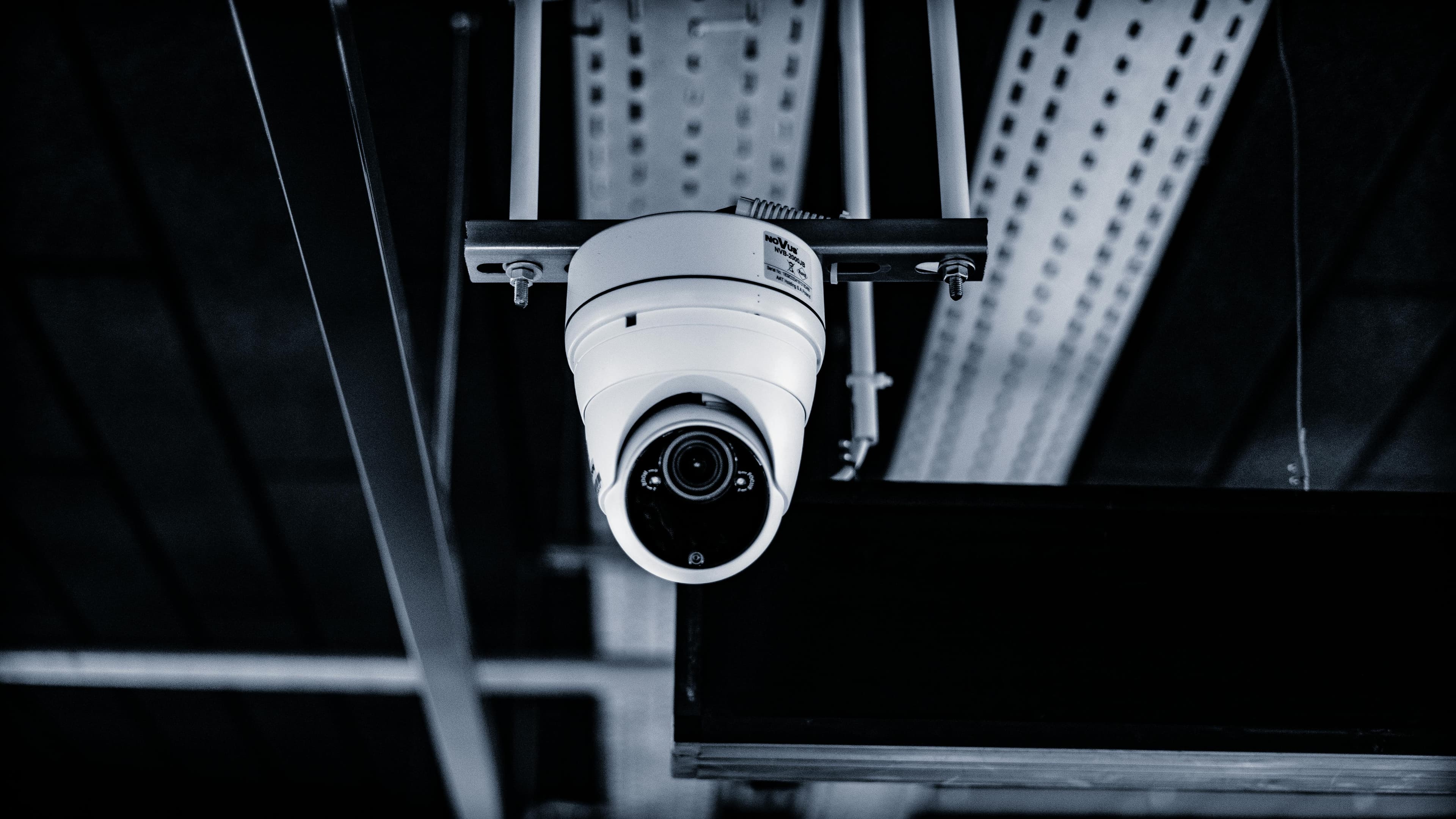
A camera system for a single-family home solves one owner's problem: protecting one residence. A condominium faces a different structure entirely. There are common areas that belong collectively to all co-owners — entrances, the guardhouse, the perimeter, visitor parking, gardens, recreation areas —, there are private units that are each individual owner's property, there is management running day-to-day operations, there is guardhouse staff that is the first physical point of control, and there is an HOA board or homeowners' association that answers for collective decisions before the assembly of co-owners and under the condominium ownership regime. The technical system must respect that architecture: cover what belongs to everyone without intruding on what belongs to each one, and be operable by the staff physically on duty at the guardhouse, shift after shift.
Why a condominium needs a specific solution
Pedestrian and vehicle access control
Only owners, authorized family members, registered domestic staff, visitors, suppliers and emergency services should enter — and that flow must be logged and consultable from the guardhouse. Access control is the system's most critical function and defines the highest-priority coverage.
Perimeter and common-area coverage
Perimeter fence, pedestrian and vehicle access, visitor parking, gardens, pool, gym, community room, children's area, tower hallways and elevators are common property of the condominium. They are the first points that require coverage and the ones the HOA board manages on behalf of all co-owners.
Respect for private units
The system covers what belongs to everyone, not what belongs to each one. No camera is aimed inside a unit, at a specific owner's window, or at private balconies. Defining those limits precisely is part of responsible design and protects the board from individual owner complaints.
Operation by guardhouse staff
Security cameras for condominiums complement the guard or doorkeeper — they do not replace them. The system must be operable from the guardhouse by staff on rotating shifts, with documented training and a clear protocol for what can be viewed, what can be exported, and to whom evidence is handed over.
That is why E3 designs each project on-site, not from a catalog. Before quoting, an E3 advisor walks the condominium with a representative of the board or management and prepares a coverage plan aligned to the actual site, the internal rules and the collective budget.
For a typical condominium in Guatemala — vertical tower, horizontal residential, or mixed complex — a complete video surveillance system is built on four main components. Browse the available Bolide camera catalog or read our base technology guide.
System components
Guardhouse and vehicle access — the critical point
The guardhouse is the first and most important control point of a condominium. The recommended configuration combines a dome or eyeball camera with varifocal lens over the pedestrian entrance to capture faces clearly, a bullet camera with long-range infrared vision over the vehicle entrance, and — when the condominium justifies it — a camera with license plate recognition (LPR, iPac AI) analytics to log plates without staff intervention. For installations with a vehicle barrier or boom gate, the video of the crossing moment is associated with the registered plate. If the condominium already has a third-party access-control system — vehicle barrier, RFID, intercom, biometric reader — the CCTV system is designed to associate video evidence with those events when it is technically possible and the third-party brand allows it.
Interior common areas and recreation zones
Tower hallways, lobbies, elevators, the community room, gym, pool area, children's area and covered parking are common-property spaces that require thoughtful coverage. We recommend discreet mini-domes indoors and eyeball or dome cameras with appropriate outdoor-grade IP protection in areas exposed to humidity. Two-way audio is reserved exclusively for control points staffed by personnel — doormen's stations, the guardhouse — and is not enabled by default in spaces of free use for owners and families.
Outer perimeter and visitor parking
The perimeter fence, the building façade, visitor parking and secondary access points require bullet cameras with long-range infrared vision. For wide areas — open parking lots, extensive gardens — PTZ cameras can cover several zones from a single point with auto-tracking on models with iPac AI. Panoramic and fisheye cameras eliminate blind spots without requiring multiple units. Perimeter intrusion analytics detect movement in inactive zones outside regular operating hours.
NVR, storage, UPS and management software
The heart of the system is the centralized Bolide NVR, located at the guardhouse or in the management room: it records locally and keeps running even if the condominium's internet goes down. Storage is sized according to the number of cameras and the retention defined by the board — typically 14 to 30 days, adjustable by internal policy. We recommend backing the NVR and the PoE switch with a UPS to maintain recording during power or fiber outages. Bolide VMS software controls who can view live video, who can export recordings, and logs every access to the system.
Technology and compliance — Bolide and iPac AI for condominiums
NDAA compliance — relevant for condominiums with international owners
Bolide Technology Group is a US manufacturer headquartered in San Dimas, California. Its iPac AI lines carry NDAA compliance (Section 889), the regulation that restricts certain manufacturers' video surveillance equipment in US federal installations. Many residential condominiums in Guatemala City and the metropolitan area have a share of foreign owners, diplomats, multinational executives, or professionals with institutional ties to the US. For those communities, NDAA-compliant equipment removes friction with the security policies of their corporate or institutional counterparts. For condominiums without international owners, the same supply-chain-security reasoning applies.
iPac AI analytics — applied with care in residential settings
Bolide cameras with iPac AI run analytics directly on the device, with no external cloud. E3 enables by default in condominiums: perimeter intrusion outside operating hours, line crossing at unauthorized entries, cross counting at the main entrance, abandoned-object detection in common areas, and video-tampering detection. License plate recognition (LPR) is enabled when the board requests it. E3 does not enable general facial recognition on owners and resident families in common areas by default. Facial recognition can be enabled on an opt-in basis only at the main entrance for contracted staff and frequent suppliers if the board formalizes it in the internal rules of the condominium.
Local recording, H.265 and autonomy against outages
All Bolide IP cameras use H.265 compression: up to twice the storage efficiency and half the bandwidth compared to H.264 — a relevant factor in condominiums where the internet connection is shared across multiple services and units. Local recording on the NVR guarantees total autonomy: the system does not depend on the condominium's internet to record video. The internet connection is used only for remote access by authorized staff and analytics notifications. With a properly sized UPS, the NVR and the PoE switch keep recording during power or fiber outages.
Good practices and regulatory compliance
Guatemala does not currently have a comprehensive personal data protection law equivalent to the European GDPR. There are pending initiatives in Congress, but none are in force. For condominiums, the operating framework comes from the condominium ownership regime and the internal rules approved in the founding deed — the instrument that defines what counts as common areas, how they are managed, and what obligations the HOA board has toward the assembly of co-owners. The Civil Code on horizontal property (art. 559) sets the basis of that regime. In that context, good practices in a condominium security camera system are not only a legal matter: they are an institutional responsibility of the HOA board, protecting the condominium from individual owner complaints, civil disputes and internal conflicts.
E3 implements the technical side of the system. The administrative side is formalized by the HOA board with its legal advisor and the assembly of co-owners. The general recommendations the condominium should document are:
- Project approval in the assembly (or subsequent ratification, per the internal rules).
- Internal rules or addendum describing the system's coverage zones and the zones explicitly excluded (private units, balconies, individual owner windows, common-area bathrooms).
- Visible "Video-monitored area" notice at every covered entrance — pedestrian, vehicle and common areas.
- Notification to owners, residents and contracted staff (ideally in the internal rules and in the contracts of guardhouse and maintenance personnel).
- Documented NVR access policy: who in the board and management can view live video, who can export evidence, in what cases and under what authorization.
- Recording retention period defined and communicated to owners (14 to 30 days as a typical range).
- Protocol for individual owner requests: if an owner asks to view a specific recording, the board decides; E3 does not hand evidence directly to individual owners.
This section is not a substitute for legal advice. The HOA board should consult its legal advisor to formalize the internal rules and the recording-access protocol per the applicable condominium ownership regime.
What we DO
- Cover the guardhouse, pedestrian and vehicle entrances, perimeter, visitor parking and common areas.
- Record locally on the condominium's NVR (recordings stay physically on the premises).
- Enable perimeter-intrusion, line-crossing, cross-counting and LPR analytics on vehicle access when the board requests it.
- Train the guardhouse staff and management in NVR use, evidence export and per-user access management.
- Suggest a recording retention period (14–30 days) and a per-user access protocol.
- Recommend the visible "Video-monitored area" notice at every entrance.
- Integrate the system with existing third-party access control (vehicle barriers, intercoms, RFID, biometrics) when technically possible.
- Back the NVR and the PoE switch with a UPS recommended by E3 to maintain recording during outages.
What we DON'T do
- Aim cameras inside private units, balconies or individual owner windows.
- Install cameras in common-area bathrooms, gym locker rooms, or condominium staff break areas.
- Upload recordings to the cloud without explicit written authorization from the HOA board.
- Hand recordings directly to an individual owner — every evidence request must go through the protocol approved by the board.
- Enable general facial recognition on resident owners and families by default.
- Enable remote video access without a documented protocol of who can see what.
- Keep recordings indefinitely without a documented policy.
- Install hidden cameras.
- Enable audio recording in common areas of free use (pool, community room, children's area) by default.
E3 Installation — the service behind the equipment
Technical visit and proposal for the board
Before quoting, an E3 technician visits the condominium with a representative of the board or management. They walk the guardhouse, pedestrian and vehicle entrances, the perimeter, common areas, and the room intended for the server or NVR. They identify priority coverage points, map zones to include and zones to exclude with precision, and size the cabling, NVR, storage and UPS. The result is a proposal with a coverage plan, list of Bolide models, camera count and technical specs — ready to present to the assembly of co-owners — with no purchase commitment.
Turnkey installation by certified technicians
Installation covers the complete project: structured cabling (UTP or coaxial — the Bolide coaxial line allows reusing existing analog cabling without re-running conduits), physical camera mounting at the guardhouse, perimeter and common areas, installation of the NVR and PoE switches in the designated room, configuration of Bolide VMS software with per-user access profiles, remote access for authorized staff, activation of the iPac AI analytics defined with the board, testing with the guardhouse team, and documented handover of the complete system.
3-year warranty, training and 24/7 support
Bolide systems installed by E3 include a 3-year warranty on the equipment. We train the guardhouse staff and management in day-to-day NVR use — live monitoring, recording review, evidence export under the protocol approved by the board — and we deliver manuals in Spanish. E3 provides 24/7 support for emergencies, especially relevant for condominiums where the guardhouse operates on 24-hour rotating shifts. Annual preventive maintenance plans are available to keep the system in optimal condition.
Frequently asked questions about security cameras for condominiums
Let's design a camera system tailored to your condominium
Talk to an E3 Solutions advisor. We make a technical visit with the board or management, assess the guardhouse, perimeter and common areas, and deliver a clear proposal — ready to present at the assembly — backed by Bolide, a 3-year warranty and professional installation.