SECURITY CAMERAS · BUSINESSES
Security cameras for businesses in Guatemala
E3 Solutions designs, installs and maintains security camera systems for businesses in Guatemala — corporate offices, warehouses, industrial plants, retail with points of sale and service companies — with Bolide technology and iPac AI analytics. A business is neither a home nor a small storefront: there is operational continuity to protect, staff with different responsibilities by area, high-value assets and inventory, evidence that may be needed for insurance claims or disciplinary processes, and in many cases multiple branches that must be viewed from a single point — the system must be designed for that operation, not as an amplified residential kit. Every project includes installation by certified technicians, a 3-year warranty on Bolide equipment, 24/7 support and training for authorized staff, with local backing from Guatemala City.
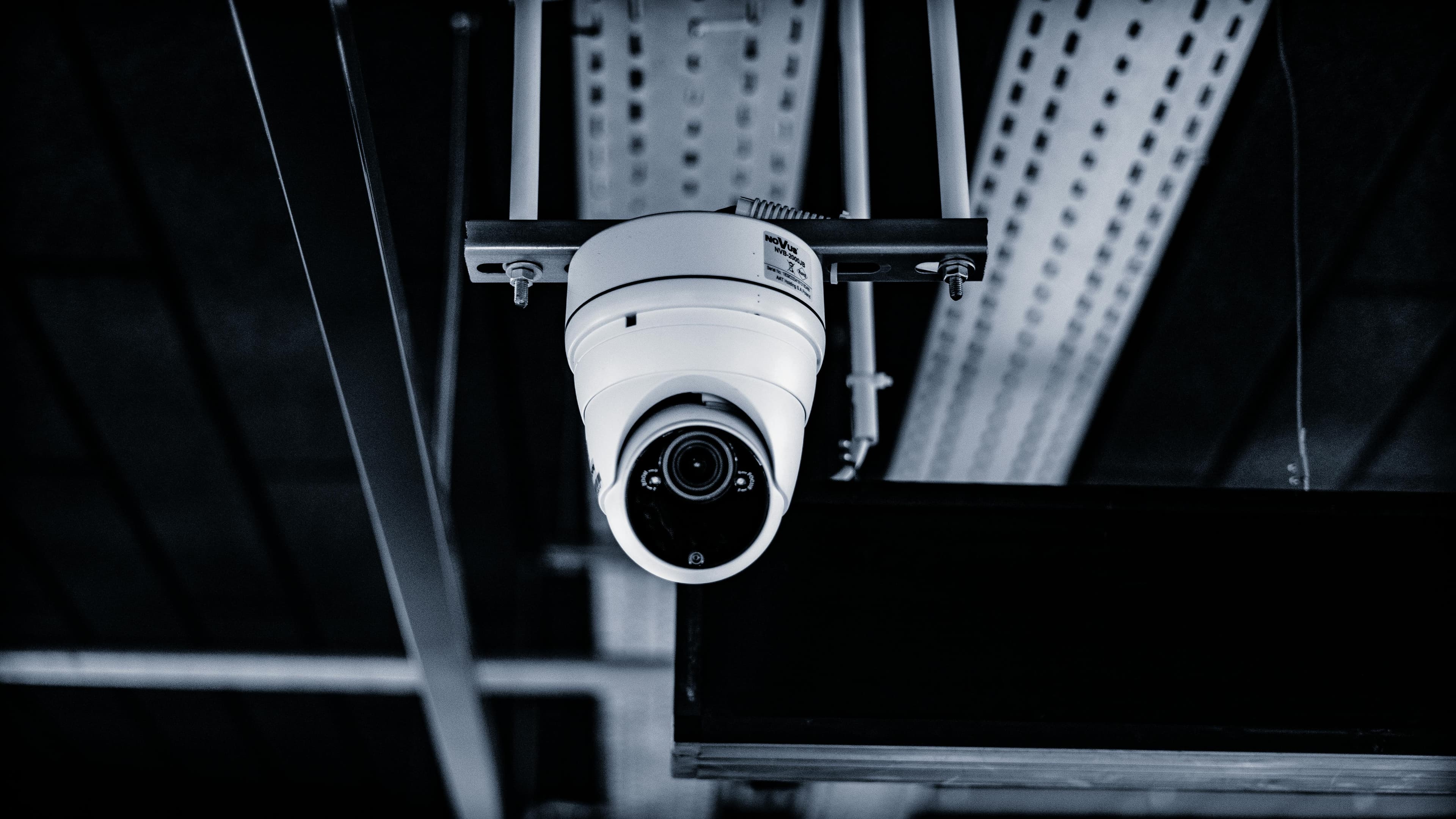
A camera system for a home or a small storefront solves a bounded problem: protecting a defined space with one or two entry points. A business faces a different operation: there is operational continuity that breaks down during an incident, there is staff on rotating shifts with different responsibilities by area, there are assets and inventory that may represent much of the balance sheet, there are critical points that cannot tolerate downtime — cash register, server room, loading dock, reception — and, in many cases, several branches or locations must be viewed from a single platform. The technical system must respect that architecture: cover what's critical, generate auditable evidence, and be operable by the staff responsible for it.
Why a business needs a specific solution
Operational continuity, not just deterrence
An incident at a warehouse that stops operations costs more than the goods removed: there is response time, inventory time, insurance-claim time and customer downtime. Security cameras for businesses help reduce that cost: seeing what happened, where and when, without relying on testimony reconstructed after the fact.
Protecting personnel and assets
The system covers critical points where staff is exposed — cash register, reception, customer service — and zones where assets are vulnerable outside operating hours: warehouse, loading dock, parking lot, workshop. Coverage is operational responsibility: it protects the employee from false accusations and the business from complaints.
Auditable evidence for incidents, claims and procedures
Recordings stay on the business's NVR, with control of who has access and a log of every export. They serve for insurance claims, documented disciplinary procedures, internal audits and, where applicable, reports to authorities. Without auditable evidence, each party's word is left in a stalemate.
Multi-site operation from a single point
For businesses with more than one location — retail chains, distributed warehouses, regional offices — Bolide VMS consolidates the video of all branches into a single interface, with role-based access profiles: general management sees everything, a branch manager sees only their site, and central security sees everything live.
That's why E3 designs each project on-site, not from a catalog. Before quoting, a technician walks the premises with the responsible contact designated by the business, identifies critical points, sizes the system, and delivers a proposal with a coverage plan and specs — with no purchase commitment.
For a typical business in Guatemala — corporate office, warehouse, light manufacturing plant, retail with showroom, or multi-site operation — a complete business video-surveillance system is built on four main components. Browse the available Bolide camera catalog or read our base technology guide.
System components
Entrances, reception and customer-service areas
Reception, the corporate lobby and customer-service points are the first auditable record of who enters and leaves. Dome or eyeball cameras with varifocal lens over the main entrance capture faces clearly; discreet mini-domes cover waiting rooms and service areas. For businesses with significant traffic, iPac AI cross-counting analytics at the main entrance delivers occupancy data without manual intervention. Two-way audio can be enabled at reception and at control points staffed by security personnel; it is not enabled in spaces of free use by staff.
Warehouses, loading dock and inventory areas
The loading and unloading dock, picking aisles, racks holding high-value goods and the dispatch area are the points where operational shrinkage concentrates. Bullet cameras with long-range infrared vision for long aisles; PTZ cameras with auto-tracking in wide areas — dock, maneuvering yard, truck parking. When the business justifies it, iPac AI LPR analytics logs vehicle entries and exits at vehicle access points. Perimeter-intrusion detection outside operating hours covers nighttime risk without false alarms from authorized-staff movement.
Offices, server room and administrative areas
Office corridors, access to restricted areas — server room, accounting, archives — and staff vehicle access points are zones where what matters is not the visible face but who is accessing what, and when. Discreet mini-domes in hallways; eyeball cameras at access to critical rooms. E3 does not aim cameras inside private closed offices or closed meeting rooms, or at staff break areas by default.
NVR, storage, UPS and multi-site platform
The heart of the system is the centralized Bolide NVR, located in the business's technical room or server room: it records locally and keeps running if the internet goes down. Storage is sized based on the number of cameras and the retention period — typically 14 to 30 days, adjustable by internal policy and the requirements of insurers or corporate customers. E3 recommends backing the NVR and the PoE switch with a UPS to maintain recording during power outages. For multi-site operations, Bolide VMS consolidates multiple NVRs into a single interface with per-user access profiles and a log of every action.
Technology and compliance — Bolide and iPac AI for businesses
NDAA compliance — relevant for businesses with US parent, contracts or clients
Bolide Technology Group is a US manufacturer headquartered in San Dimas, California. Its iPac AI lines carry NDAA compliance (Section 889), the regulation that restricts certain manufacturers' video surveillance equipment in US federal installations and among federal contractors. In Guatemala, this is directly relevant for businesses with a US parent — subsidiaries of multinationals, BPOs and contact centers serving US clients, exporters with corporate contracts, international franchises. The most common Asian brands in the local market have been under US government restriction since November 2022, an FCC ban upheld on appeal in 2024: using them can create procurement friction with the corporate counterpart. For businesses without US ties, the same supply-chain-security reasoning applies.
iPac AI analytics — oriented to business operations
Bolide cameras with iPac AI run analytics directly on the device, with no external cloud — the business keeps control of its recordings. E3 enables by default in businesses: perimeter intrusion outside operating hours, line crossing at unauthorized entries, person and vehicle detection, abandoned-object detection — relevant in warehouses and service areas — cross counting at main entrances and video-tampering detection. LPR analytics for vehicle access points and region entrance/exit detection in restricted areas are enabled when the business requests it. General facial recognition on staff is not enabled by default: if the business decides to implement it at access points to critical rooms, it must formalize it through its internal policy and documented notice to staff.
Local recording, H.265 and operational autonomy
All Bolide IP cameras use H.265 compression: up to twice the storage efficiency and half the bandwidth compared to H.264 — relevant in businesses where the corporate internet is shared with ERP, IP telephony, videoconferencing and mission-critical operations. Local recording on the NVR guarantees autonomy: the system does not depend on the business's internet to record; the internet is used only for remote access by authorized staff and notifications. With a properly sized UPS, the NVR and the PoE switch keep recording during power or fiber outages. For businesses with 24/7 operation, that means a power outage does not create a blind window in the record.
Good practices and responsible staff monitoring
Guatemala does not currently have a comprehensive personal data protection law equivalent to the European GDPR. There are initiatives under discussion in Congress, but none is fully in force as applicable law as of May 2026. In the absence of a comprehensive regime, operational regulation comes from the constitutional framework, the Labor Code and the company's internal labor rules. In that context, good practices in a business camera system are not only a legal requirement: they are an operational responsibility that protects the company from staff complaints, inspections by the General Labor Inspectorate, civil claims and reputational damage.
E3 implements the technical side of the system. The administrative side is formalized by the company with its legal advisor, Human Resources and management. The general recommendations the company should document are:
- Visible "Video-monitored area" notice at every covered access — pedestrian, vehicle, work areas, reception, warehouse and parking.
- Notification to staff about the existence of the system, included in the employment contract, in the internal labor rules, or in a signed memo — ideally in both documents.
- Explicit exclusion of bathrooms, locker rooms, lactation rooms and staff break areas from the covered zone.
- Documented NVR access policy: who can view live video, who can export recordings, in what cases and under what authorization — at minimum two separate roles: viewing and export.
- Defined recording retention period (typically 14 to 30 days, adjustable by industry and the requirements of insurers or corporate customers).
- Protocol for evidence requests: who receives them, who authorizes them, how each export is documented — especially important in disciplinary processes and insurance claims.
- If the company belongs to a group with an international parent or serves clients with their own privacy policies, align the local policy with the group's corporate policy.
This section is not a substitute for legal advice. The company should consult its labor advisor and, where applicable, its compliance team, to formalize its video-surveillance policy and staff notification per the Guatemalan regime currently in force — which remains in legislative discussion as of this publication.
What we DO
- Cover entrances, reception, warehouse, loading dock, customer-service areas, perimeter and parking.
- Record locally on the business's NVR (recordings stay physically on the premises).
- Enable perimeter-intrusion, line-crossing, cross-counting, abandoned-object and LPR analytics when the business requests it.
- Configure role-based access profiles — viewing and export — with a log of every action.
- Train authorized staff (security manager, IT, management) in NVR use, evidence export and access management.
- Suggest a retention period (14–30 days) and a documented export protocol.
- Recommend the visible "Video-monitored area" notice at every covered entrance.
- Integrate with third-party access-control, alarm or point-of-sale (POS) systems when technically possible and the existing brand allows it — compatibility case by case.
- Back the NVR and the PoE switch with a UPS recommended by E3 to maintain recording during outages.
- For multi-site businesses, consolidate multiple NVRs in Bolide VMS with per-branch access profiles.
What we DON'T do
- Install cameras in bathrooms, locker rooms, lactation rooms or staff break areas — without exception.
- Aim cameras inside private closed offices or closed meeting rooms by default.
- Enable audio recording in work areas or staff free-use areas by default.
- Upload recordings to the cloud without explicit written authorization from the company.
- Enable remote video access without a documented protocol of who can see what.
- Enable general facial recognition on staff by default.
- Hand recordings to a third party without going through the protocol approved by management or the security team.
- Keep recordings indefinitely without a documented retention policy.
- Install hidden cameras.
- Promise specific integrations with POS, access control or alarm systems without first validating the technical compatibility of the existing system.
E3 Installation — the service behind the equipment
Technical visit and proposal for management
Before quoting, an E3 technician visits the premises with the responsible contact designated by the business — operations manager, security manager, IT or administration. They walk entrances, reception, operational areas, warehouse, perimeter, parking and the technical room. They identify critical points and zones explicitly excluded, size the cabling, NVR, storage and UPS, and — for multi-site operations — the centralized platform. They deliver a proposal with a coverage plan, list of Bolide models, camera count and technical specs, ready to present to general management or the decision-making committee — with no purchase commitment. The primary coverage area is Guatemala City and metropolitan area; for businesses with locations in the interior of the country or in Central America, please consult.
Turnkey installation by certified technicians
Installation covers the complete project: structured cabling — UTP or coaxial depending on the existing infrastructure; the Bolide coaxial line allows reusing existing analog cabling, lowering cost for businesses migrating from an older system — physical camera mounting, installation of the NVR and PoE switches in the designated room, configuration of Bolide VMS software, per-user access profiles, remote access, activation of the iPac AI analytics defined with the business, integration with third-party systems when technically feasible, testing with authorized staff and documented handover. For operations that cannot tolerate interruption, installation is scheduled during low-activity windows or weekends.
3-year warranty, training and 24/7 support
Bolide systems installed by E3 include a 3-year warranty on the equipment. We train authorized staff at the company — security manager, IT, operational management — in day-to-day NVR use: monitoring, search by event, evidence export under the approved protocol, and profile management; we deliver manuals in Spanish. E3 provides 24/7 support for emergencies, especially relevant for businesses with rotating-shift operations or chains with branches operating extended hours. Annual preventive maintenance plans are available.
Frequently asked questions about security cameras for businesses
Let's design a camera system tailored to your business
Talk to an E3 Solutions advisor. We make a technical visit with the responsible contact at your business, assess entrances, operational areas, warehouse, perimeter and — where applicable — the multi-site operation, and deliver a clear proposal to present to management, backed by Bolide, a 3-year warranty and professional installation.